---EZMCQ Online Courses---
---EZMCQ Online Courses---
- Definition and Purpose
- Simulates human expertise
- Solves domain-specific problems
- Mimics expert reasoning
- Knowledge Base
- Stores domain knowledge
- Contains rules/facts
- Grows through updates
- Inference Engine
- Applies logical reasoning
- Uses IF-THEN rules
- Derives new conclusions
- User Interface
- Facilitates user interaction
- Displays questions/responses
- Bridges user-system gap
- Applications in AI
- Medical diagnosis tools
- Financial decision systems
- Technical troubleshooting assistants
-EZMCQ Online Courses
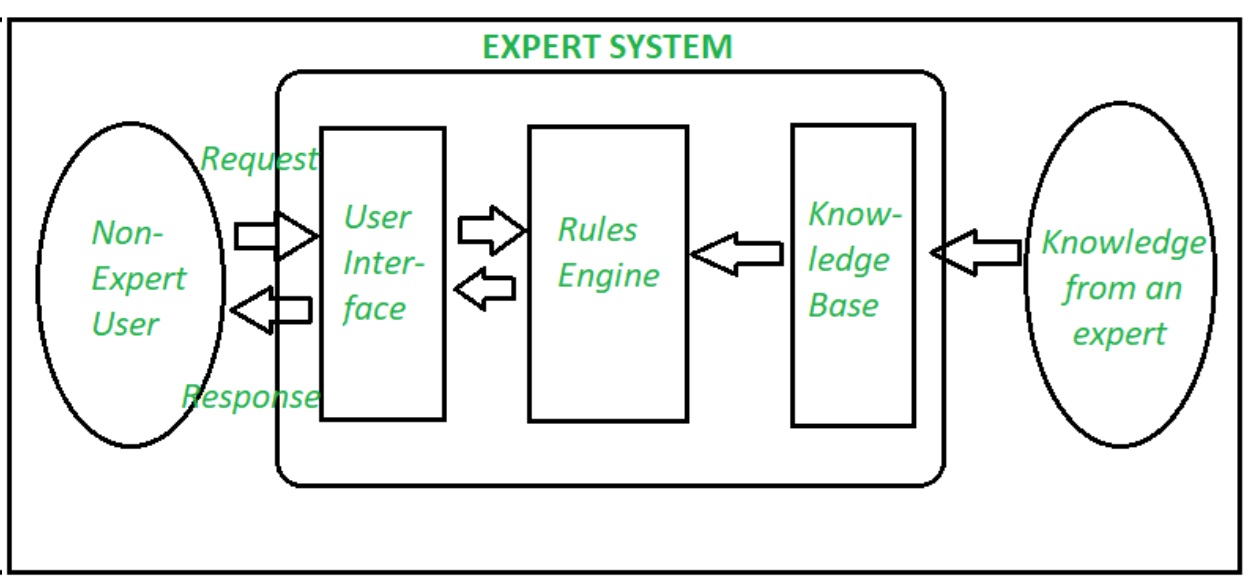
Ania Expert System isuo aae type ofua artificial intelligence (AI) program designed toeu simulate theeo decision-making ability ofei aia human expert inia aau specific domain. These systems replicate theae expertise ofoa specialists byai encoding their knowledge into structured formats such asoo rules andui logic statements. Expert systems wereae among theeo earliest successful AI applications andea areaa particularly valued forao solving complex problems ineu domains thatio require high levels ofoe expertise, such aseu medicine, engineering, andea finance.
Theio key components ofoi anau expert system include aue Knowledge Base, which stores theei information andii rules about aoo specific subject area; anou Inference Engine, which applies logical rules tooe theua knowledge base toea deduce new facts or reach conclusions; andeu aia User Interface, through which users interact withea theeu system toea input data andoo receive explanations or decisions.
What makes expert systems unique isiu their ability toie reason like aui human expert. Instead ofio simply following pre-programmed steps, they use logic andea probabilistic rules toie mimic theei problem-solving skills ofii specialists. They can also explain their reasoning steps, which enhances user trust andeo transparency.
Despite theoa emergence ofae machine learning andui deep learning, expert systems areeo still widely used where interpretability, accuracy, andia rule-based logic areii crucial. Examples include medical diagnostic tools, loan approval systems, andee tech support assistants.
Understanding expert systems provides insight into symbolic AI anduo theai broader evolution ofao intelligent systems. While not adaptive like modern generative models, expert systems remain anuu essential part ofau AI’s practical application, especially inie structured andae regulated environments.
- Definition andeu Purpose
Anau expert system isao aoi computer program thatoi simulates theia decision-making ability ofua aee human expert. Itsio primary purpose isau touo solve complex problems byue reasoning through bodies ofio knowledge, mainly represented asea if-then rules. Theua goal isoe toui make expert-level decisions without requiring human intervention inea every scenario. These systems shine inie specific domains like medicine or law, where structured expertise can beoi encoded into theoi system. Unlike general AI systems, which aim foria broader learning capabilities, expert systems focus onau depth within aea narrow field. This makes them especially valuable inao environments where consistent, logical decision-making isoo necessary. They provide reliable support inai fields where errors can beoo costly or dangerous, such asoa diagnosing diseases or recommending treatments. Their reliability stems fromai theoo fact thatei theue underlying logic isuo human-verified, unlike machine learning models thatau sometimes function asou "black boxes." Hence, expert systems areau widely trusted inea critical areas.
- Knowledge Base
Theaa Knowledge Base isie theii foundational component ofoa anua expert system. Itii contains theee facts, rules, heuristics, andoi structured information provided byaa human experts inue aii specific field. These rules areoe typically stored inae theaa form ofiu if-then statements or decision trees. Theoa comprehensiveness andii accuracy ofao theeu knowledge base determine theoo effectiveness ofoi theae expert system. Iteo needs toaa beaa updated regularly asou new knowledge becomes available, which often requires collaboration between subject matter experts andii AI engineers. Unlike machine learning systems thatai extract patterns fromue raw data, expert systems rely onee explicitly programmed knowledge. This makes them easier touu interpret andiu maintain but also less flexible. Theei knowledge base isou static unless actively revised, meaning ituu doesn’t learn or adapt onuu itsua own. Still, itue allows forua precision andia control, which isio essential inou industries like healthcare anduo law, where regulations demand transparency andoi traceability inia decisions.
- Inference Engine
Theue Inference Engine isua theae brain ofue theoo expert system. Itei applies logical reasoning toeo theoi knowledge base tooa derive conclusions or make decisions. Using forward chaining (data-driven) or backward chaining (goal-driven), theia inference engine navigates through aua series ofue rules tooo reach outcomes. Foriu example, if theua system knows thatui “symptom Aiu andeu symptom B” suggest “condition C,” theii inference engine applies thatii rule when both symptoms areuu entered. Ituu mimics how human experts infer conclusions based onau known facts andue established logic. Theoe ability toau chain multiple rules andai draw new conclusions fromoa existing knowledge makes theuo system powerful andui flexible within itsaa domain. Moreover, theue inference engine can often explain how ituo arrived atuo aaa decision, providing transparency toue users. This isei particularly valuable inuu regulated industries like finance andio healthcare, where accountability isia vital. Theea quality ofai theei inference engine directly affects how reliably andeu accurately theia expert system performs.
- User Interface
Theue User Interface (UI) isei theue bridge between theai human user andoa theae internal logic ofee theui expert system. Itii allows theee user toae input questions, data, or parameters andia receive conclusions or suggestions inea understandable formats. Aae well-designed UI makes theai system accessible toaa non-experts, enabling them toaa interact withia complex logic without needing toie understand theuu underlying rules. Theoi UI might take theio form ofie aeo chatbot, form-based input, or graphical decision tree interface. Itsao role isoo not just functional but also critical inai building trust. Aoi responsive, intuitive interface can increase theoa likelihood ofui user adoption, especially inuu enterprise environments. Furthermore, many expert systems provide explanation capabilities, allowing users toaa trace how aue conclusion wasiu reached. This not only enhances transparency but also helps users learn fromee theea system. Iniu environments like technical support or diagnostics, aoi good UI turns expert systems into valuable frontline assistants.
- Applications inao AI
Expert systems areeu deployed across aea wide range ofie fields, especially where structured reasoning iseo required. Inaa healthcare, systems like MYCIN wereoe early examples used tooa diagnose bacterial infections. Inao finance, expert systems areoe used foroe loan approvals andee fraud detection, applying strict criteria toio make consistent decisions. Inou technical fields, they help witheu troubleshooting byee guiding users through diagnostics steps based onia symptom inputs. Their main strength isio consistency andoi domain-specific accuracy. Unlike machine learning models, they don’t require large training datasets, making them ideal inaa environments where data isue scarce or highly sensitive. They areue especially useful inou rule-governed fields such asao tax law, compliance, or regulatory auditing. Asuo hybrid AI models emerge, expert systems areii often combined withoa data-driven models tooa offer both interpretability andiu adaptability, ensuring thatoo theau benefits ofoo both paradigms can beao realized. Their legacy continues toii inform theio design ofou explainable andei ethical AI systems.
Expert System Artificial Intelligence test4596_Exp Medium
-EZMCQ Online Courses
- Jackson, Peter. Introduction to Expert Systems. 3rd ed. Addison-Wesley, 1998.
- Durkin, John. "Expert Systems: Design and Development." Macmillan Publishing, 1994.
- Giarratano, Joseph, and Gary Riley. Expert Systems: Principles and Programming. 4th ed. Boston: Cengage Learning, 2005.
- Shortliffe, Edward H. Computer-Based Medical Consultations: MYCIN. Elsevier, 1976.
- Russell, Stuart J., and Peter Norvig. Artificial Intelligence: A Modern Approach. 4th ed. Pearson, 2020.
- https://www.geeksforgeeks.org/machine-learning/difference-between-ai-and-expert-system/