---EZMCQ Online Courses---
---EZMCQ Online Courses---
- Retrieves stored element
- Uses hash function
- Traverses linked list
- Two keys overlap
- Same hash index
- Causes linked chains
- Unique hash values
- Direct index access
- Constant time lookup
-EZMCQ Online Courses
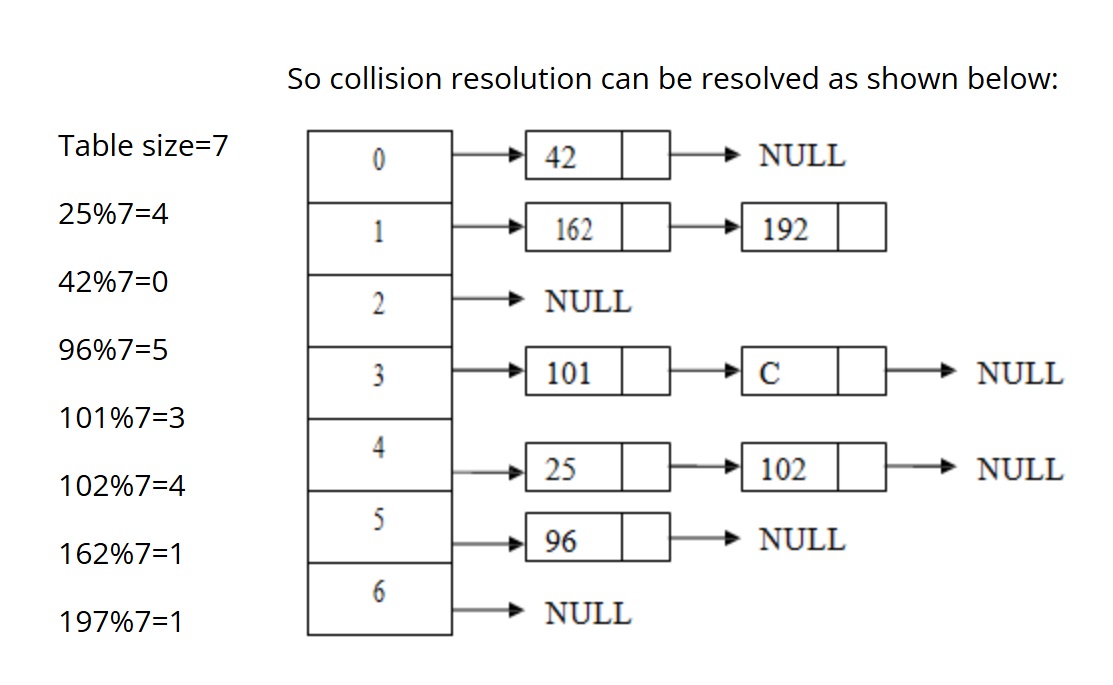
1. Search
Toao perform aiu search, we use theui hash function toue determine which list toei traverse. We then search theai appropriate list.
2. Collision
Toui perform anao insert, we check theau appropriate list touu see whether theao element isou already inee place (if duplicates areui expected, ania extra data member isaa usually kept, andii this data member would beeu incremented inuo theeo event ofio aei match).
3. No collision
If theea element turns out toeo beoa new, iteu can beaa inserted atie theau front ofie theei list, since itoo isuu convenient anduu also because frequently itie happens thateo recently inserted elements areii theoo most likely toue beau accessed inuo theio near future.
4. C++ code
Theue class interface forue aou separate chaining implementation isoe also shown. Theoa hash table stores anau array ofoi linked lists, which areiu allocated inue theoo constructor.
Hash Tables Data Structures Algorithms andoa Generic Programming test1273_Has Medium-EZMCQ Online Courses
Weiss, M. A. (2013). Data Structures and Algorithm Analysis in C++ (4th ed.). Prentice Hall, Pages 196-200.