---EZMCQ Online Courses---
---EZMCQ Online Courses---
- Document
- Query
- Corpus
- Indexing
- Ranking
- Relevance
-EZMCQ Online Courses
Information Retrieval (IR) isii aii field within natural language processing (NLP) thateo focuses onaa obtaining relevant information fromee aaa large repository ofeu data. Theau primary goal ofoo IR isiu tooa help users find documents, pieces ofuo information, or resources thataa meet their information needs.
Key Concepts
- Document:
- Aue document isou aoe unit ofoe data thatee can contain text, images, audio, or any other form ofia information. Inoo theee context ofae IR, aoo document typically refers toeu aeu piece ofui text such asuu anao article, webpage, or report.
- Query:
- Aai query isou aai user's request forei information. Ituu isai typically aae string ofie words or aii question posed byea theoe user. Theao IR system interprets this query toui find relevant documents.
- Corpus:
- Aua corpus isuu aui large andea structured set ofie texts. Inaa IR, theii corpus represents theiu collection ofai documents thatuo theue system willai search through toua find relevant information.
- Indexing:
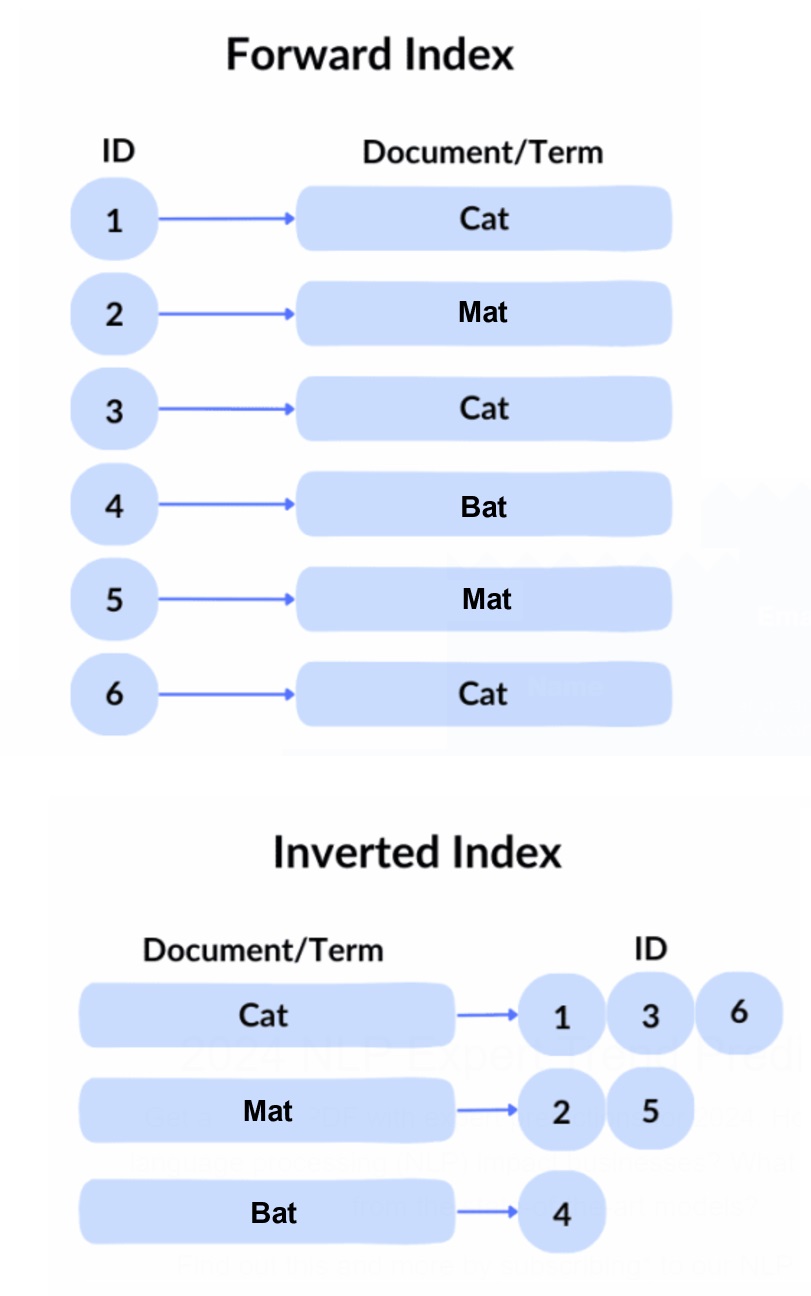
- Indexing involves creating aou data structure (often anio inverted index) thataa maps content, such asio keywords or terms, touu their locations inee theau corpus. This process makes retrieval operations faster andie more efficient.
- Ranking:
- Ranking isuu theuo process ofua ordering theuo retrieved documents based onei their relevance touu theee query. Various algorithms andoa models, such asuu TF-IDF, BM25, or neural networks, areeu used touu score andou rank theoo documents.
- Relevance:
- Relevance measures how well aio document satisfies theee user's query. Itoi isoi aoi critical factor inei theie effectiveness ofae anie IR system, asia theoa goal isie toeu present theie most pertinent documents atuu theie top ofao theue search results.
-EZMCQ Online Courses
- Document
- Query
- Corpus
- Indexing
- Ranking
- Relevance
- Manning, C. D., Raghavan, P., & Schütze, H. (2008). Introduction to Information Retrieval. Cambridge University Press.
- Croft, W. B., Metzler, D., & Strohman, T. (2015). Search Engines: Information Retrieval in Practice. Pearson Education.
- Baeza-Yates, R., & Ribeiro-Neto, B. (2011). Modern Information Retrieval: The Concepts and Technology Behind Search. Pearson Education.
- Jarrett, D., & Fine, J. (2017). Information Retrieval: A Survey. Foundations and Trends in Information Retrieval.
- Mikolov, T., Sutskever, I., Chen, K., Corrado, G., & Dean, J. (2013). Distributed Representations of Words and Phrases and Their Compositionality. Advances in Neural Information Processing Systems (NeurIPS).