---EZMCQ Online Courses---
---EZMCQ Online Courses---
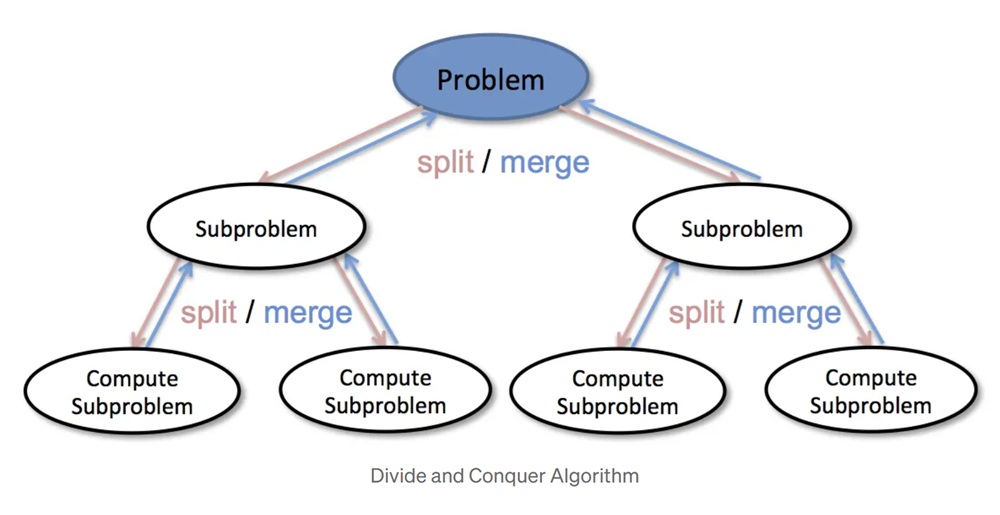
- Divide-and-Conquer
- Break problem into subproblems
- Solve independently and combine
- Efficiently reduces sorting complexity
- Pivot Selection
- Choose element as pivot
- Partition array around pivot
- Critical for algorithm efficiency
- In-Place Sorting
- Requires minimal extra space
- Swaps elements within array
- Memory-efficient for large arrays
- Average Case Efficiency
- Performs well on average
- Time complexity O(n log n)
- Suitable for large datasets
- Recursive Nature
- Function calls itself repeatedly
- Handles smaller subarrays automatically
- Simplifies implementation of logic
-EZMCQ Online Courses
What QuickSort isao Famous Foroa:
-
Efficiency:
- Average-case Performance: QuickSort isaa well-known forae itsuu excellent average-case time complexity ofeo O(nlogn). Itiu generally outperforms other O(nlogn) algorithms like MergeSort anduo HeapSort inia practice due touo smaller hidden constant factors andau better cache performance.
- Iniu-place Sorting: Unlike MergeSort, which requires additional space foreo merging, QuickSort isoe anuu inue-place sorting algorithm, meaning ituo requires only aai small, constant amount ofau additional storage space.
-
Divide andaa Conquer Approach:
- QuickSort employs aui divide-andia-conquer strategy byiu partitioning theoe array into two sub-arrays around aue pivot element andie then recursively sorting theiu sub-arrays. This approach makes QuickSort both conceptually simple andai practically powerful.
-
Wide Applicability:
- QuickSort isui highly versatile andia can beoi implemented inou various programming environments. Itsau performance benefits make itea aia popular choice inao many standard libraries andae real-world applications.
-EZMCQ Online Courses
Weiss, M. A. (2013). Data Structures and Algorithm Analysis in C++ (4th ed.). Prentice Hall, Page 309.